What does the 1960 dime silver content really show? Does it confirm the coin by itself? Can you trust the look, or do you need more than one clue? These are the right questions to ask before you touch the coin with anything harsh.
A coin checker such as Coin ID Scanner can help identify the type, year, and expected specs fast. That is useful when several similar coins sit in one group. It can also keep a collector from mixing silver and later clad pieces. But silver confirmation still depends on physical checks that do not harm the surface.
Why Collectors Avoid Destructive Tests
Collectors do not scratch, file, or pour acid on a coin unless they are willing to lose part of its market appeal. That is the basic rule. A coin is not only metal. It is also a condition, originality, and collector trust.
A rough test can answer one question and damage three others. The coin may still be silver after the test, but it may no longer be attractive. That matters even on a common date.
The main risks are simple:
Scratches reduce appeal
Acid marks damage surfaces
Filing destroys originality
Cleaning changes the look
A safe check is slower. It is also smarter.
Quick Overview of the 1960 Dime
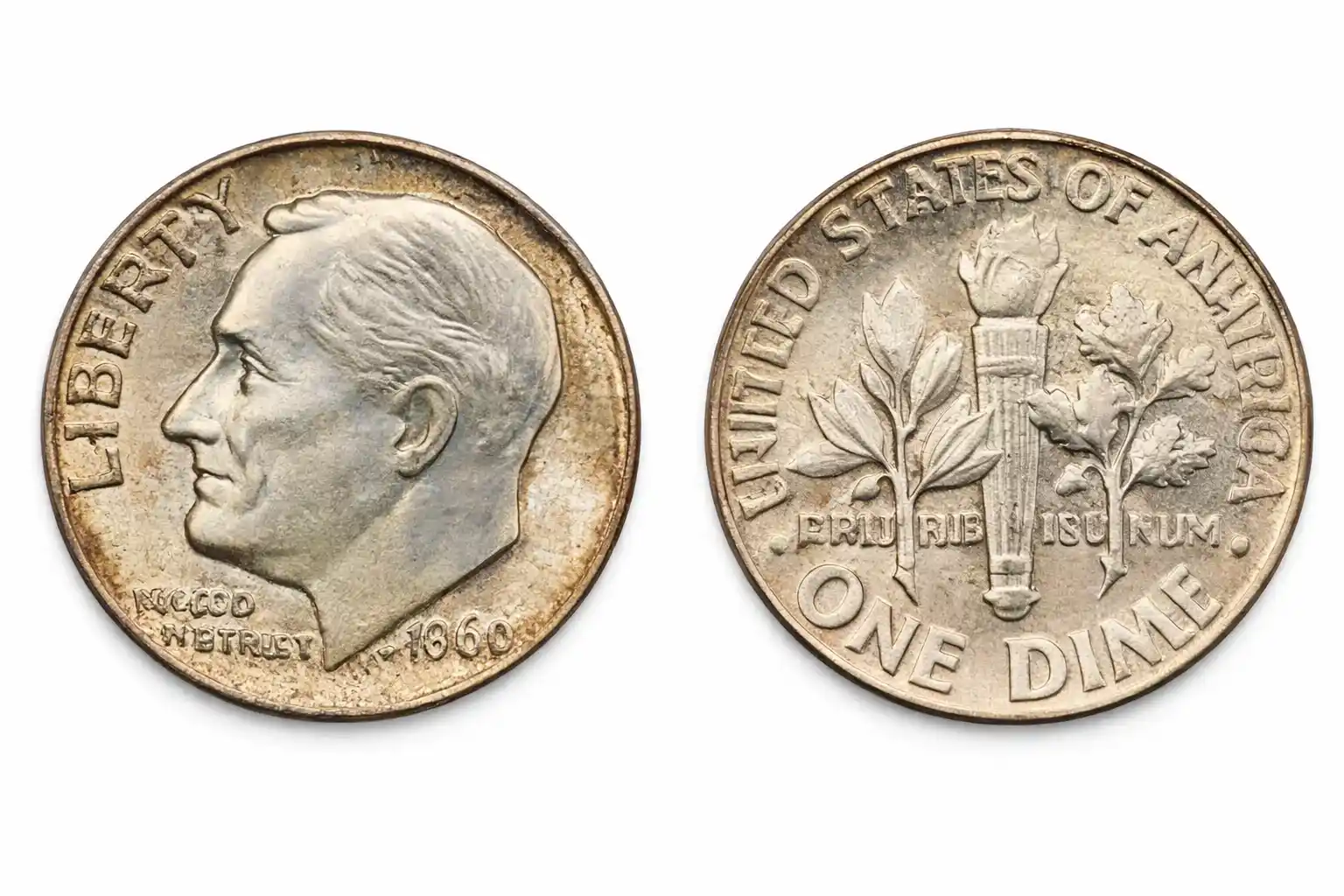
The 1960 Roosevelt dime is a good example because it is a familiar silver issue, and its metal specs are clear. It belongs to the pre-1965 U.S. dimes made in a 90% silver, 10% copper alloy. That makes it useful for explaining how collectors confirm silver without harming the coin.
Feature
1960 dime
Denomination
Dime
Composition
90% silver, 10% copper
Weight
2.50 g
Diameter
17.9 mm
Edge
Reeded
Type
Roosevelt dime
This table gives the expected standard. The job of the collector is not to guess. The job is to compare the actual coin with the expected coin.
Start With the Eyes
The first check is visual. It is not final proof, but it gives direction.
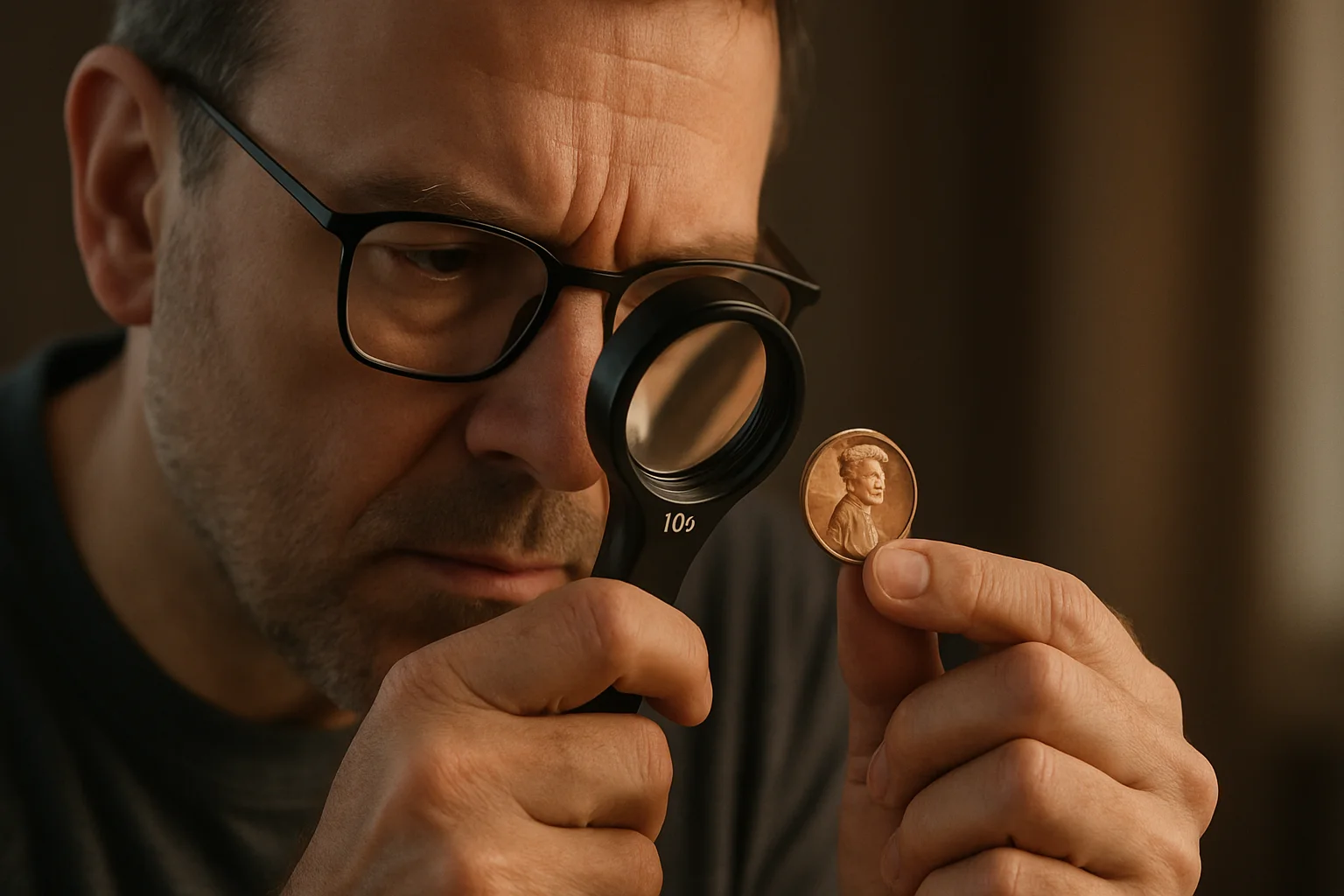
Silver coins often show a softer gray-white tone than later clad pieces. Their wear can look different, too. High points may soften, but the coin usually keeps a silver-colored edge and a more even metal appearance. That is one reason the eye test remains useful.
Still, visual reading has limits. Tone can mislead. Light can mislead. A cleaned coin can look too bright. A dipped coin can lose depth and still seem attractive for a moment.
What the eye can do well:
Catch obvious color mismatch
Notice suspicious brightness
See wear on high points
Spot edge color differences
What the eye cannot do alone is settle the question completely. That is why experienced collectors move from sight to measurement.
Weight Is One of the Best Safe Tests
Weight is one of the strongest non-damaging checks because metal composition and weight belong together. A 1960 dime should weigh 2.50 grams when it is close to the standard. A worn coin may come in a little lower, but not by a dramatic amount.
A small digital scale can answer a lot without touching the coin in a destructive way. It will not tell the whole story, but it can confirm that the coin behaves as a silver dime should.
Check
What it suggests
Correct weight
Good sign for expected composition
Slight loss
Possible normal wear
Strong mismatch
Reason for caution
Weight matters because it cuts through guesswork. A coin may look right and still be wrong. A coin may look odd and still weigh correctly. The scale gives a hard number. That number is not the final answer, but it is one of the best clues available.
A practical rule works well here: compare the coin to the known standard, allow for normal circulation wear, and stay cautious if the result falls too far away from expectation.
The Edge Check Is Fast and Useful
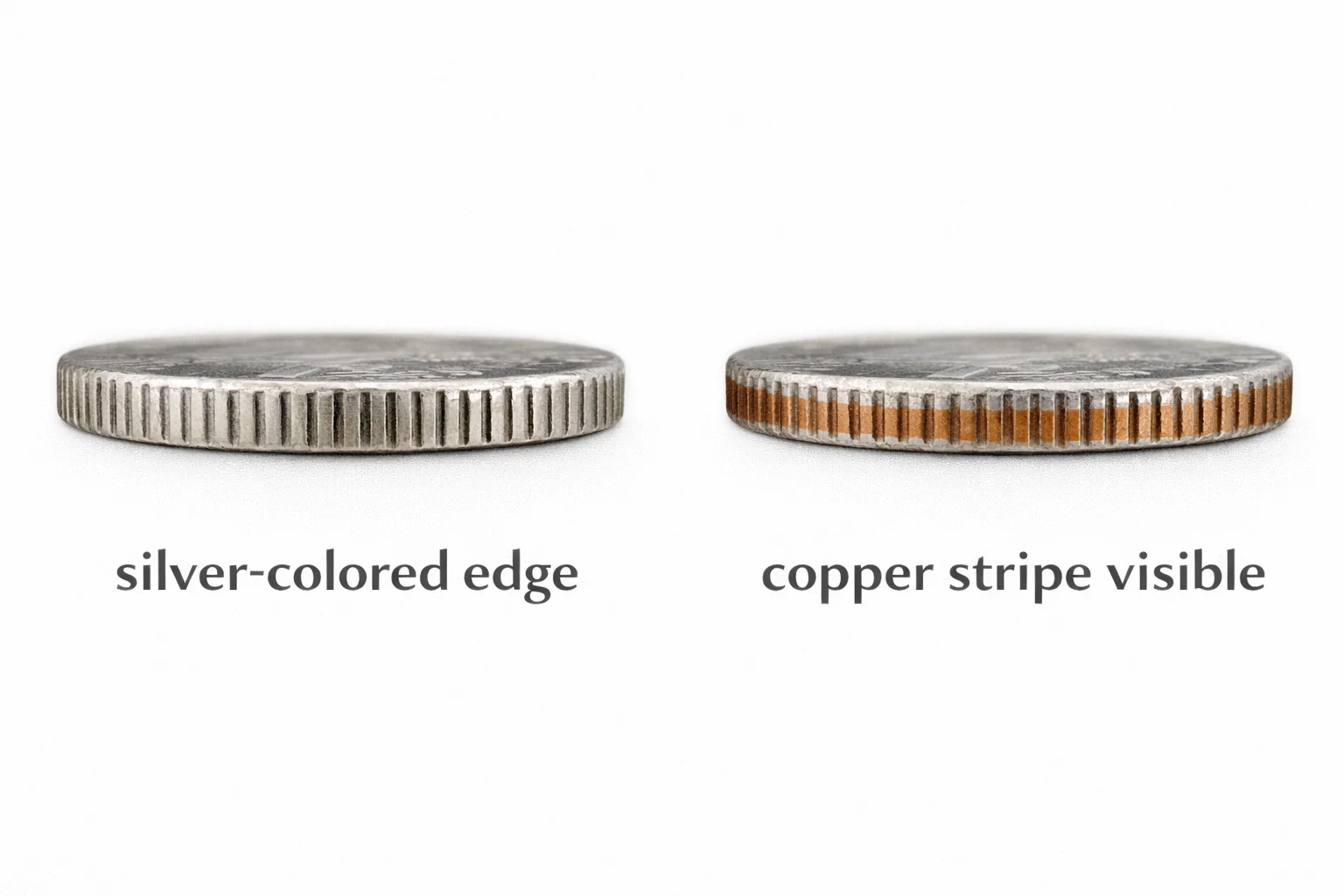
The edge is often the quickest composition clue on U.S. coinage. A silver Roosevelt dime should not show the copper-colored stripe that appears on later clad dimes. That makes the edge check valuable because it is immediate and non-invasive.
You do not need a tool for this. You need good light and a steady look. Turn the coin and study the edge all the way around. On a genuine silver dime of this date, the edge should appear silver-colored throughout.
This is one reason silver dimes are easier to sort than some other coins. The metal often gives itself away at the edge before the rest of the coin does.
Sound Helps, but It Does Not Decide Everything
Many collectors know the ring test. They balance the coin, tap it lightly, and listen for a higher, longer ring that silver often produces. This method has some value, but it also has clear limits.
Sound changes with wear. It changes with handling. It changes with the way the coin is held and the surface it touches. That means the ring test is a supporting clue, not a final proof.
Use it carefully and only when it makes sense:
Compare similar coins
Tap gently
Avoid hard drops
Treat sound as one clue
Collectors go wrong when they turn this into a magic trick. It is not. A good ring supports the case for silver. It does not replace weight, edge, and close observation.
What Not to Do
Some methods look fast because they are rough. That does not make them smart.
Do not do this to a collectible coin:
Do not scratch the surface
Do not file the edge
Do not use acid
Do not polish the coin
Do not clean it to “see better”
Even if the coin turns out to be common, surface damage still matters. A collector coin should not be tested like scrap metal. The goal is to confirm the metal and keep the coin intact.
One Clue Is Not Enough
This is where the process becomes clearer. Experienced collectors rarely rely on a single sign. They combine several safe checks and look for agreement between them.
A good sequence works like this:
Read the general look
Check the edge
Weigh the coin
Use sound only as support
Compare the result with the known standard
That layered method is stronger than any one trick. It also reduces bad decisions. A coin that looks silver, weighs correctly, and shows the right edge has already passed several useful tests without damage.
After Metal Comes Value
Once the silver content looks right, the next question is value. That is where many people move too quickly. Silver content gives a base. It does not settle the whole market story.
A free coin value app is helpful, as it gives a quick reading of the coin type, general range, and similar issues. That is helpful when a collector wants a fast overview and even value ranges. It still does not replace grade, surface quality, or collector demand.
A silver coin can have:
Melt value only
Modest collector value
Better premium because of the grade
Extra interest because of eye appeal
This matters because not every silver coin should be treated like bullion, and not every silver dime deserves a premium. Metal is one layer. Market quality is another.
A Practical Reading of the 1960 Dime
If the coin is a 1960 Roosevelt dime, the safest path is clear. Start with the expected specs. Check the silver-colored edge. Weigh the coin. Look at the surface and ask whether the metal, color, and wear all make sense together.
A proper silver dime usually feels internally consistent. The look, the edge, and the weight support each other. A questionable coin often breaks that pattern somewhere. The edge may look wrong. The weight may drift too far. The surface may feel unusual for the type.
That is why collectors trust the method more than impulse.
FAQ
Can you confirm silver just by looking?
Not fully. The look can point in the right direction, but visual reading should be backed by weight and edge checks.
Is weight better than color?
Yes. Color is useful, but weight is more objective and less affected by lighting or surface tone.
Does the ring test prove silver?
No. It supports the case. It does not settle it.
Can a digital tool replace physical checks?
No. It can identify the coin and its expected specs, but it cannot replace weight, edge reading, and careful observation.
Is a silver coin automatically valuable?
No. Silver gives a metal base. Collector value still depends on grade, originality, and demand.
Final Thought
Collectors do not need harsh tests to read silver content well. The strongest method is simple: compare the coin with its expected standard and let several safe clues support the same answer. On a coin like the 1960 dime, that usually means the edge, the weight, and the surface.
That approach protects two things at once. It protects the conclusion, and it protects the coin.